


Prelim Biology: Cell Organelles of Eukaryotes
5 Mins Read | By Simon Tang
Key Points Summary:
- Eukaryotic cells have membrane bound organelles, so are much more complex than prokaryotic cells.
- Their organelles include the nucleus, mitochondria, chloroplasts, and even non-membrane bound organelles like ribosomes and cell membranes.
- We as humans are made up of eukaryotic cells.
What Are They?
Cells are the basic building blocks of life. From blue whales to bacteria, all life is made up of these microscopic spheres. Just like how a human being has many organs, cells are made up of many organelles. These act very similar to real organs; they perform a very specific role to help the organism live. This blog is going to be going through the different organelles of eukaryotic cells.
What Parts Do They Have?

Eukaryotic cells are cells that are primarily characterised by the presence of membrane bound organelles. This means that they have organelles that have a membrane surrounding it, like a nucleus or mitochondria. In Greek, prokaryote is broken down into εὖ (eu, “well” or “good”) and κάρυον (karyon, “nut” or “kernel”).
Keep in mind that they don’t just have to have membrane-bound organelles – they have non-membrane- bound organisms too!
The most common organisms that are made up of prokaryotic cells are animals, plants and fungi.
Below is a summary of the different parts (not including the ones already described and shared with prokaryotic cells):
Nucleus – The Brain
The nucleus acts as the control centre of the cell. It is a membrane-bound organelle that protects the cell’s DNA from the cytoplasmic environment.
A nuclear envelope surrounds the nucleus, consisting of inner and outer membranes, with the latter connecting to the rough endoplasmic reticulum.
Chloroplast – The Fuel
The chloroplast is only present in photosynthetic organisms such as plants and is therefore not present in animals. It is the organelle that permits sunlight to be used as an energy source to split the water molecule and produce oxygen, while allowing the fixation of inorganic carbon dioxide into glucose, which can then be used by living organisms for energy. Think of the glucose produced as the fuel needed for a fire.
Mitochondrion – The Fire
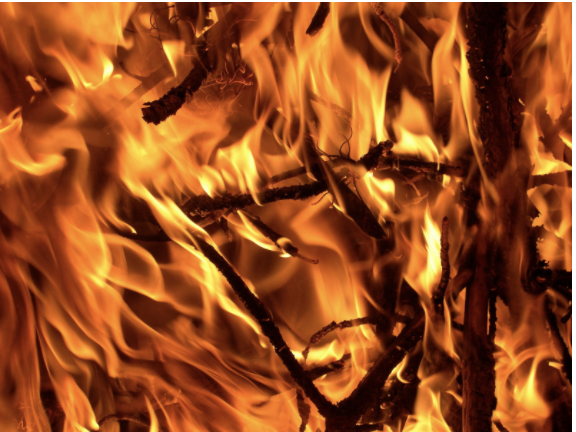
Mitochondria are the powerhouse of the cell. The main role of mitochondria are the synthesis of adenosine triphosphate (ATP), the major molecule that supplies energy to the cell. When ATP is used for energy, it loses a phosphate and becomes ADP (adenosine diphosphate). Think of a fire, burning fuel (food) to make heat (energy).

Endoplasmic Reticulum – The Transport System
The endoplasmic reticulum is a network of membranous tubules extending from the outer nuclear membrane into the cytoplasm.
Closer to the nucleus is the rough endoplasmic reticulum (rough ER). It appears to have a rough texture due to the presence of ribosomes located on its surface. These ribosomes produce many of the proteins that are ultimately located in the plasma membrane or secreted from the cell.
Extending from the rough ER is the smooth endoplasmic reticulum (smooth ER). There are no ribosomes here, and hence the texture appears smooth. The smooth endoplasmic reticulum is important for the biosynthesis of some molecules, such as lipids.
The endoplasmic reticulum overall plays an important role in the processing of proteins and their trafficking to the correct locations throughout the cell.

Golgi Body – The Post Office
The Golgi bodies are membranous structures that appear as stacks of flattened rings. The Golgi body is the site of processing, packaging, and trafficking of macromolecules such as proteins and lipids. This includes modifying proteins by adding other chemical components, packaging molecules into vesicles (small structures consisting of fluid enclosed by a circle piece of lipid bilayer) and sorting molecules for transport to and from the cell membrane. The Golgi body also produces lysosomes.
Lysosome – The Stomach
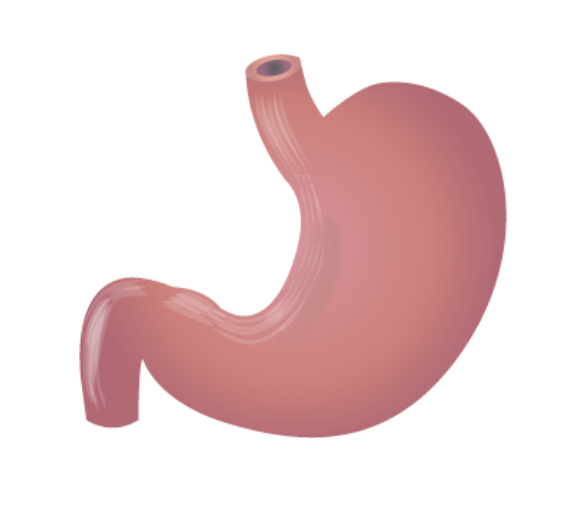
Lysosomes are small, membrane-bound sacs that specialise in the breakdown of molecules. Lysosomes bud off from the Golgi apparatus. The inside of a lysosome contains many powerful digestive enzymes and a low pH to facilitate the function of these enzymes. Lysosomes degrade toxic molecules and protect the cell from damage and break down nutrients so that the raw products such as amino acids can be recycled by the cell.
Vacuole – The Water Storage
Vacuoles appear as seemingly empty spaces within a cell, separated from the cytoplasm by a lipid membrane. They tend to be much larger and more prominent in plant cells than animal cells.
In plant cells, there is typically one large vacuole filled with water and various ions, proteins, sugars and other macromolecules. It is used for storage of useful molecules for later extraction or waste materials for isolation from the rest of the cell. The vacuole also helps to maintain turgor pressure, by controlling the transport of water and ions between the vacuole and cytoplasm.
In animal cells, vacuoles are typically smaller. They appear as small, membrane-bound sacs that aid exocytosis and endocytosis, processes that involve the exit and entry of substances in membrane-bound vesicles. Animal cell vacuoles also perform storage functions, much like the plant vacuole.
What about Prokaryotic Cells?
There are two main types of cells that life is made up of – prokaryotic and eukaryotic cells. You can learn more about prokaryotic cells here.